




הסכסוך הערבי-ישראלי בספרי לימוד
The Politics of National Celebrations
ישראל בסביבה משתנה
The Decline of Arab Unity
בין יציבות למהפכה
החתירה להגמוניה בעולם הערבי
מפילגש לידועה בציבור
וילה בג׳ונגל?
The Quest for Hegemony in the Arab World
Chances for Peace
The Ottoman Middle East

منشורات

Israel in a Changing Neighborhood: Challenges and Opportunities (In Hebrew)
كتب محررة

Israel in a Changing Neighborhood: Challenges and Opportunities (In Hebrew)

2026

Elie Podeh and Onn Winckler (eds.). Israel in a Changing Neighborhood. Jerusalem: Carmel and Yedioth Ahronoth, forthcoming.
In 2020, Israel signed normalization agreements with the United Arab Emirates, Bahrain, and Morocco, known as the “Abraham Accords.” These agreements opened new security, diplomatic, and economic opportunities for Israel in the Middle East and the Red Sea arena. However, Hamas’s attack on October 7, 2023, and the consequent war in the Gaza Strip, in Lebanon against Hezbollah, against the Houthis in Yemen, and the “Twelve-Day War” with Iran, led to a setback and the loss, perhaps temporary, of some of the achievements of the Abraham Accords. This volume, which includes twenty articles by leading Israeli experts in Middle Eastern and Israel studies, analyzes the changes that have taken place in Israel’s position and status following two dramatic events of the 2020s – the Abraham Accords and the October 7 war. The chapters focus on examining the transformations that have occurred in the regional environment surrounding Israel, encompassing the Middle East, the Mediterranean Sea, and the Red Sea. This is the third volume in a trilogy, which also includes The Third Wave: Protest and Revolution in the Middle East (2017) and Between Stability and Revolution: A Decade since the Arab Spring (2021).
'Talking to the Enemy': Clandestine and Public Encounters for Peace Between Israel and Syria, 1948-2022 [in Hebrew]
فصول في المجموعات

'Talking to the Enemy': Clandestine and Public Encounters for Peace Between Israel and Syria, 1948-2022 [in Hebrew]

2025

'Talking to the Enemy'." In Meir Litvak and Eyal Zisser (eds.), The Middle East in Turbulent Times. Tel Aviv: The Moshe Dayan Center, 2025, pp. 69-106.
Israel's 2005 Disengagement from Gaza: A Multilateral Move under Unilateral Façade
مقالات محكمة

Israel's 2005 Disengagement from Gaza: A Multilateral Move under Unilateral Façade

2025

"Israel's 2005 Disengagement from Gaza." Middle Eastern Studies, Vol. 61, No. 5 (2025), pp. 719-735.
Israel’s 38-year presence in Gaza officially ended on 12 September 2005, when the last Israeli soldier departed the Strip. This event, known as the Gaza Disengagement, involved evacuating 21 settlements and displacing 8000 settlers from their homes. Prime Minister Sharon, who initiated the Gaza Disengagement, portrayed it as a unilateral action—meaning it was carried out without the involvement of the Palestinian Authority (PA), led by Mahmoud Abbas. Consequently, the term ‘hitnatkut had-tzdadit’ (unilateral disengagement) gained popularity and became the official term used to describe the event. Based on leaked American and Palestinian documents, as well as interviews with prominent Israelis and Americans involved in the events, this article presents two arguments: first, contrary to the prevailing notion that the Gaza Disengagement was unilaterally executed by Israel, it was actually implemented with the coordination of the PA, the United States (US), the Quartet, Egypt, and Jordan. Second, the failure of the Gaza Disengagement should be attributed both to Israel’s reluctance to use it as a platform to advance the peace process, and the PA’s lack of resolve to curb Hamas’s and Islamic Jihad’s terror acts.
Much Ado about Something: The Tiran and Sanafir Islands in International, Regional and Domestic Politics (1841–2023)
مقالات محكمة

Much Ado about Something: The Tiran and Sanafir Islands in International, Regional and Domestic Politics (1841–2023)

2025

"Much Ado about Something." Israel Studies, Vol. 30, No. 1 (Spring 2025), pp. 1-26.
The Tiran and Sanafir are two small arid and uninhabited islands at the mouth of the Gulf of ‘Aqaba, close to the Egyptian and Saudi shores. Their importance derives from their strategic location at the entrance to the Gulf of Aqaba and the maritime route to Jordan’s port Aqaba and Israel’s port Eilat. Since the 19th century, they have played an important role in international, regional and domestic politics, with the involvement of numerous actors: the Ottoman Empire, Britain, Italy, the United States, the kingdom of Hijaz, Egypt, Saudi Arabia, Jordan, Israel and the United Nations. The aim of this article is to explore the micro-history of the Tiran and Sanafir islands, as well as the Tiran Straits, as a center of power politics. It would show that what started as an international dispute between Britain and the Ottoman Empire, turned into a regional conflict within the Arab-Israeli conflict, and finally ended as a heated issue in Egyptian domestic politics, affecting also Egyptian-Saudi relations. In 2023, with the return of the islands to their original owner – Saudi Arabia – a two centuries long conflict came to an end.
Villa in the Jungle? Israel in the Middle East
كتب

Villa in the Jungle? Israel in the Middle East

2025

Villa in the Jungle? Israel in the Middle East. Jerusalem: Carmel and Yedioth Ahronoth, 2025.
Is Israel really a “villa in the jungle”? Ehud Barak and Benjamin Netanyahu, who have each used this expression, expressed a condescending popular perception among Israel’s leadership — and the public more broadly — that did not see Israel as politically, economically, or culturally part of the Middle East. This volume of essays addresses Israel’s place in the Middle East from a variety of strategic, political, educational, and academic perspectives. The book shows that, contrary to common Israeli perceptions of a besieged state destined to live alone, Israel has played varied roles in the Middle East, both overt and covert, during both war and peace. The Hamas attack on October 7, 2023, and the ensuing war, place the question of Israel’s regional standing to a critical test.
'Talking to the Enemy': Clandestine and Public Encounters for Peace Between Israel and Syria, 1948-2023
مقالات محكمة

'Talking to the Enemy': Clandestine and Public Encounters for Peace Between Israel and Syria, 1948-2023

2024

'Talking to the Enemy'." Israel Studies, Vol. 29, No. 2 (2024), pp. 30-60.
Israeli-Syrian relations have often been characterized by hostility and violence. Despite these periods of animosity, there were genuine opportunities for peace between them. However, these opportunities were not realized for various reasons. This article explores the failed attempts to engage in talks and potentially reach a peace agreement. The failures appear to stem from the personalities and decision-making styles of the leaders, as well as specific historical circumstances unique to each period. Key factors contributing to the failures include the significant gap between the two sides in terms of proposed solutions, a lack of leadership legitimacy, mutual distrust between leaders and societies, and a deep-seated sense of enmity that fostered animosity within each society, making it difficult for leaders to act contrary to prevailing negative perceptions.
From Leader to Partner: Egypt's Declining Role in the Arab System (1952-2020)
فصول في المجموعات

From Leader to Partner: Egypt's Declining Role in the Arab System (1952-2020)

2024

"From Leader to Partner." In Uzi Rabi and Mira Tzoreff (eds.), From the 1919 Revolution to the 2011 Arab Spring. London: Routledge, 2024, pp. 137-160.
Israel and Sudan: The Origins of Clandestine Relations, 1954-1964
مقالات محكمة

Israel and Sudan: The Origins of Clandestine Relations, 1954-1964

2023

"Israel and Sudan," Israel Studies, Vol. 28, No. 2 (2023), pp. 1-28.
The years 1954-1964 witnessed two phases of clandestine contacts pursued by Israeli and Sudanese representatives. During the first phase, 1954-1958, Israel developed secret ties with the Sudanese Umma party Israel in an attempt to establish the southern tier of the Periphery Alliance, with Ethiopia and Sudan against Nasser's Egypt but the attempt was sabotaged by the 1958 'Abboud coup. During the second phase, beginning in 1961, the Division for Politico-Economic Planning (DPEP) of Israel's Ministry of Foreign Affairs developed secret ties with certain Sudanese officials with the aim of helping Sudan compete with its primary competitor in the cotton market, Nasser's Egypt, in order to deal a blow to the Egyptian economy and the Arab boycott of Israel. Although at first the DPEP supplied the 'Abboud regime with anonymous information, over time the Sudanese partners recognized and approve the identity of their Israeli benefactor. This article reveals the extent of the secret ties between Israel and Sudan and the ingenious ways in which Israel fought against Egypt and the Arab Boycott.
Anthems in the Arab World: A Hybrid National Symbol
مقالات محكمة

Anthems in the Arab World: A Hybrid National Symbol

2022

"Anthems in the Arab World," Nations and Nationalism, Vol. 28/4 (2022), pp. 1379-1394.
Israel Secret Relations in the Middle East
فصول في المجموعات

Israel Secret Relations in the Middle East

2022

"Israel Secret Relations in the Middle East". In P R Kumaraswamy (ed.), The Palgrave International Handbook on Israel. London: Routledge, 2022.
Israel's Secret Relations with States and Minorities in the Middle East, 1948-2020 [in Hebrew]
كتب

Israel's Secret Relations with States and Minorities in the Middle East, 1948-2020 [in Hebrew]

2022

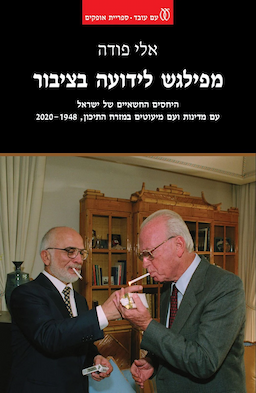
Israel’s Secret Relations with States and Minorities in the Middle East, 1948-2020. Tel Aviv: Am Oved, 2022. 899 pages. [in Hebrew]

This book explores Israel’s clandestine relationships with Middle Eastern nations and minorities from 1948 through the 2020 Abraham Accords. Challenging the narrative of Israeli isolation, it reveals how the Mossad, the defense establishment, and the Foreign Ministry maintained secret ties with regional rivals driven by shared interests.

The text details how these "behind-closed-doors" partnerships—particularly those focused on countering Iranian nuclear ambitions—evolved into the public diplomatic breakthroughs with the UAE, Bahrain, Morocco, and Sudan. Drawing on diverse historical sources and over 100 interviews with senior officials, the book tracks Israel’s transition from a regional "mistress" to a legitimate, public partner.

Awards: The book won two awards: the Chechik Prize from the Institute for National Security Studies (INSS) and the Kornbluth Prize from the Cherrick Center for the Study of Zionism, the Yishuv, and the State of Israel at the Hebrew University.

The Many Faces of Normalization – Models of Arab-Israeli Relations
مقالات محكمة

The Many Faces of Normalization – Models of Arab-Israeli Relations

2022

"The Many Faces of Normalization," Strategic Assessment, Vol. 25, No. 1 (March 2022), pp. 55-78.
Between Stability and Revolution: A Decade to the Arab Spring [Hebrew]
كتب محررة

Between Stability and Revolution: A Decade to the Arab Spring [Hebrew]

2021

Elie Podeh and Onn Winckler (eds.), Between Stability and Revolution: A Decade to the Arab Spring. Jerusalem: Carmel, 2021.
In December 2020, ten years marked the Arab Spring protests that began in Tunisia and spread to many other Arab countries. These protests led to the overthrow of regimes in Tunisia, Egypt, Libya, and Yemen; to civil wars in Syria, Libya, and Yemen; and to significant upheavals in other Arab states. In 2018–2019, secondary waves of the Arab Spring occurred in Lebanon, Algeria, Sudan, Morocco, and Iraq, also resulting in political changes. The COVID-19 pandemic temporarily halted further protests, but at the same time it further exacerbated the economic situation in most Arab countries, which was already fragile. The purpose of this edited volume is to examine the political, economic, and social impacts of the Arab Spring protests a decade later, with particular attention to the implications of these events for the stability of Arab states. The main conclusion that emerges from the book’s chapters is that in today’s Arab world, alongside unstable, weak, and failing states, there are also states that enjoy governmental stability and economic resilience among the strongest in the world.
Secret histories: Israel's Road to Normalization
مقالات أخرى

Secret histories: Israel's Road to Normalization

2021

“Secret histories: Israel’s Road to Normalization”, Jewish Quarterly, August 2021, pp. 51-67.
Israel in a Changing Middle East
مقالات أخرى

Israel in a Changing Middle East

2020

“Israel in a Changing Middle East”, in Amal Jamal (ed.). Israel and the Palestinian Predicament: A Constructive Strategic Perspective. I’lam – Arab Center for Media Freedom, Development and Research, 2020, pp. 149-170.
A Distorted Other: Jews, Israel and the Arab-Israeli Conflict in Egyptian School Textbooks
فصول في المجموعات

A Distorted Other: Jews, Israel and the Arab-Israeli Conflict in Egyptian School Textbooks

2018

"A Distorted Other." In Elie Podeh and Samira Alayan, Multiple Alterities. London: Palgrave/Macmillan, 2018, pp. 141-166.
Introduction: Views of Others in School Textbooks – A Theoretical Analysis
فصول في المجموعات

Introduction: Views of Others in School Textbooks – A Theoretical Analysis

2018

Samira Alayan and Elie Podeh, "Introduction." In Elie Podeh and Samira Alayan, Multiple Alterities. London: Palgrave/Macmillan, 2018, pp. 1-18.
Multiple Alterities: The View of the Other in School Textbooks in the Middle East
كتب محررة

Multiple Alterities: The View of the Other in School Textbooks in the Middle East

2018

Elie Podeh and Samira Alayan, Multiple Alterities: The View of the Other in School Textbooks in the Middle East. London: Macmillan/Palgrave, 2018.
The book examines the role of the textbook in legitimizing established political and social orders. It analyzes the ways in which ‘the other’ is presented in school textbooks, focusing on a number of countries in the Middle East and North Africa (MENA) region, and argues that the role of textbooks in developing and maintaining a national identity should be afforded greater critical attention. Textbooks can help form national identities by developing a society’s collective memory; this might involve a historical narrative which may be self-contradictory or even fabricated to the certain extent, including myths, symbols and collective memories that divide ‘us’ from ‘them’, and ultimately creating a dichotomy between the Self and the Other. Addressing a range of theoretical questions relating to the study of textbooks generally, the book – edited by Elie Podeh and Samira Alayan – also covers broad spectrum of Middle Eastern states and societies with contributions from Turkey, Iran, Egypt, Cyprus, Lebanon, Iraq, Kurdistan, Jordan, Morocco, Tunisia, Israel and Palestine. Names of participants: Samira Alayan, Nathan Brown, Areti Demosthenous, Iris Fruchter-Ronen, Eckhardt Fuchs, Arnon Groiss, Sherko Kirmanj, Jonathan Kreiner, Medi Nahmiyaz, Achim Rohde, Katherine Maye-Saidi, Falk Pingel, Elie Podeh, Yael Teff-Seker, Hana Shemesh (Rash).
Saudi Arabia and Israel: From Secret to Public Engagement, 1948-2018
مقالات محكمة

Saudi Arabia and Israel: From Secret to Public Engagement, 1948-2018

2018

"Saudi Arabia and Israel," Middle East Journal, Vol. 72, No. 4 (2018), pp. 563-586.
Diversity Within a Show of Unity: Commemorating the Balfour Declaration (1917-2017)
مقالات محكمة

Diversity Within a Show of Unity: Commemorating the Balfour Declaration (1917-2017)

2017

"Diversity Within a Show of Unity," Israel Studies, Vol. 22, No. 3 (2017), pp. 1-30.
The article analyzes the way in which Jewish and Israeli institutions commemorated the Balfour Declaration from its inception to the 100th anniversary in 2017 with particular emphasis on the 1967 Jubilee celebrations. In contrast to the government's desire to use the event as a vehicle to strengthen the state's legitimacy and validate the hegemony of the Labor-oriented Zionist leadership, the event reflected political and ideological fragmentation.
Saudi-Egyptian Relations in Historical Perspective: The Foundations of a Solid Entente
فصول في المجموعات

Saudi-Egyptian Relations in Historical Perspective: The Foundations of a Solid Entente

2017

"Saudi-Egyptian Relations in Historical Perspective." In Robert Mason (ed.), Egypt and the Gulf. Berlin: Gerlach Press, 2017, pp. 44-61.
The Third Wave? Protest and Revolution in the Middle East [in Hebrew]
كتب محررة

The Third Wave? Protest and Revolution in the Middle East [in Hebrew]

2017

Elie Podeh and Onn Winckler, The Third Wave? Protest and Revolution in the Middle East. Jerusalem: Carmel, 2017.
In December 2010, an unemployed young Tunisian named Mohamed Bouazizi set himself on fire. This act ignited mass protests—first in Tunisia and then in other Arab countries. These protests led to the overthrow of regimes in Tunisia, Egypt, Libya, and Yemen; sparked civil wars in Syria, Yemen, and Libya; and caused upheavals in other states. These events, soon labeled the “Arab Spring,” constituted a third wave of awakening in the Arab world since the establishment of the Arab territorial states following the fall of the Ottoman Empire after World War I. Many of the hopes invested in the revolutions were dashed; their outcomes were disappointing: violence, anarchy, and instability spread across most of the countries that experienced revolution. Syria, Libya, and Yemen became failed states. In some cases, jihadist Islamist organizations filled the vacuum of governance. This book represents the first attempt in Hebrew to examine the Arab Spring upheaval in its various dimensions.
Chances for Peace: Missed Opportunities in the Arab-Israeli Conflict
كتب

Chances for Peace: Missed Opportunities in the Arab-Israeli Conflict

2015

Chances for Peace: Missed Opportunities in the Arab-Israeli Conflict. Austin: University of Texas Press, 2015. 407 pages.
Drawing on a newly developed theoretical definition of “missed opportunity”, Chances for Peace uses extensive sources in English, Hebrew and Arabic to systematically measure the potentiality level of opportunity across some ninety years of attempted negotiations in the Arab-Israeli conflict. With enlightening revelations that defy conventional wisdom, this study provides a balanced account of the most significant attempts to forge peace. From Arab-Zionist negotiations at the end of World War Ito the subsequent partition, the aftermath of the 1967 war and the Sadat initiative, and numerous agreements throughout the 1980s and 1990s, concluding with the Annapolis Conference in 2007 and the Abu Mazen-Olmert talks in 2008, this book uses empirical criteria and diverse sources to assess the protagonists’ roles at more than two dozen key junctures.
Israel and Saudi Arabia and the Arab-Israeli Conflict: Hostility vis-à-vis Mutual Interests [Hebrew]
فصول في المجموعات

Israel and Saudi Arabia and the Arab-Israeli Conflict: Hostility vis-à-vis Mutual Interests [Hebrew]

2014

"Israel, Saudi Arabia and the Arab-Israeli Conflict," in Shaul Yanai and Uzi Rabi (eds.), The Persian Gulf. Tel Aviv: Dayan Center, 2014, pp. 235-280.
Israel and the Arab Peace Initiative – A Plausible Missed Opportunity?
مقالات محكمة

Israel and the Arab Peace Initiative – A Plausible Missed Opportunity?

2014

"Israel and the Arab Peace Initiative," Middle East Journal, Vol. 68, No. 4 (2014), pp. 584-603.
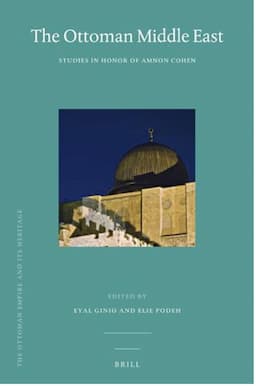
The Ottoman Middle East: Studies in Honor of Prof. Amnon Cohen
كتب محررة

The Ottoman Middle East: Studies in Honor of Prof. Amnon Cohen

2014

Eyal Ginio and Elie Podeh, The Ottoman Middle East: Studies in Honor of Prof. Amnon Cohen. Leiden: E. J. Brill, 2014.
This collection of articles – a tributed to Prof. Amnon Cohen’s distinguished academic career – discusses various political, social, cultural and economic aspects of the Ottoman Middle East. By using various textual and visual documents, produced in the Ottoman Empire, the collection offers new insights into the matrix of life during the long period of Ottoman rule. The different parts of the volume explore the main topics studied by Amnon Cohen: Ottoman Palestine, Egypt and the Fertile Crescent under Ottoman rule, Ottoman Jews and their relations with the surrounding societies and various social aspects of Ottoman societies. Names of Participants: Yaron Ben-Naeh, Eyal Ginio, Jacob Landau, Bernard Lewis, Rachel Milshtein, Elie Podeh, Mina Rozen, Khader Salameh, Amy Singer, Ehud Toledano, Nicolas Vatin, Gilles Veinstein, Michael Winter, Fruma Zachs, Dror Ze’evi,
Celebrating Continuity: The Role of State Holidays in Syria (1918-2010)
مقالات محكمة

Celebrating Continuity: The Role of State Holidays in Syria (1918-2010)

2013

"Celebrating Continuity," British Journal of Middle East Studies, Vol. 40, No. 4 (2013), pp. 1-29.
National holidays are one of the major instruments of regimes and rulers aiming to legitimise their hegemony and maintain the social and political order. This article deals with the way in which successive Syrian regimes have celebrated the national—secular and religious—holidays. It compares the various Syrian regimes: the monarchy (1918–1920); the mandate period (1920–1946); and the republic period (1946–present).Although the latter period will be treated as a whole, the analysis differentiates between five periods: post-independence (1946–1958); the United Arab Republic (UAR; 1958–1961); the secessionist regime (1961–1963); and the Ba‘th regime (1963–present), with Bashar replacing his father in June 2000. The main thesis of this article is that Syrian regimes prefer continuity over change in the realm of state holidays. Thus, in contrast to Iraq, where each new regime has attempted to delegitimise its predecessor by abolishing the national calendar and inventing a new one, Syrian regimes have added new holidays to the calendar without erasing the old ones. In this way, Syria's calendar resembles an edifice occasionally renovated according to the regime's needs, but never demolished. This policy emanated from a desire to demonstrate continuity even in times of change and upheaval, while at the same time consolidating the local national identity, which has often competed with other supra-identities, such as pan-Arabism and Islam.
Farewell of an Age of Tyranny? The Egyptian Spring as a Model
مقالات أخرى

Farewell of an Age of Tyranny? The Egyptian Spring as a Model

2011

“Farewell of an Age of Tyranny? The Egyptian Spring as a Model,” Sharqiyya (Fall 2011), pp. 12-20. Reprinted as “Farewell to the Age of Tyranny? Egypt as a Model of Arab Revolution.” Palestine-Israel Journal, Vol. 18 (2012), pp. 10-18.
 
Iraq and the Arab System in the Post-2003 War Period: A Persistent Marginality
فصول في المجموعات

Iraq and the Arab System in the Post-2003 War Period: A Persistent Marginality

2011

"Iraq and the Arab System in the Post-2003 War Period." In Amnon Cohen and Noga Efrati (eds.), Post-Saddam Iraq. Brighton: Sussex Academic Press, 2011, pp. 266-294.
This is the first comprehensive attempt to describe and analyse the major developments in Iraq from the US-led invasion until 2010. It is the product of specialists in the history of Iraq, the Arab and Muslim world, with a wide range of views of Iraq's past and present. The main focus is the internal political scene -- increasingly developing along ethnic-sectarian and religious lines (Shi'is and Sunnis, Kurds and Arabs) -- discussed in the context of re-emerging Iraqi national identity. Other major developments, not unrelated to politics, are also addressed: women's rights and economic trends. The book provides an important external, international dimension to Iraq's post-war development through discussion of the central role played by the Iranian regime and its deep and multi-faceted involvement in the Iraqi internal scene; the ambivalent relations with Turkey, which concurrently serves as the main terrestrial channel of trade and economic ties with the world; and Iraq's persisting marginal position in the affairs of the Arab world. The political developments within Iraq are discussed up to the most recent events (December 2010), when a new government was set up. It remains to be seen whether the former centralist policies of the prime minister will prevail in a state which is gradually disposing of the American military presence, assuming command over its unsolved problems of security and daily life as well as of its future stability.
The Politics of National Celebrations in the Arab World
كتب

The Politics of National Celebrations in the Arab World

2011

The Politics of National Celebrations in the Arab World. Cambridge: Cambridge University Press, 2011. 338 pages.
Why do countries celebrate defining religious or significant events in their history and how and why do their leaders selected certain events for commemoration? This book is the first systematic study of the role of celebrations and public holidays in the Arab Middle East from the fall of the Ottoman Empire to the present. By tracing the history of the modern nation-state through successive generations, this book shows how Arab rulers have used public holidays as a means of establishing their legitimacy and a sense of national identity. More recently, some states have attempted to nationalize religious holidays in the face of Islamic revival. With its many illustrations and copious examples from across the region, the book offers an alternative perspective on the history and politics of the Middle East.
The Symbolism of the Arab Flag in Modern Arab States: Between Commonality and Uniqueness
مقالات محكمة

The Symbolism of the Arab Flag in Modern Arab States: Between Commonality and Uniqueness

2011

"The Symbolism of the Arab Flag," Nations and Nationalism, Vol. 17, Part 2 (2011), pp. 419-442.
Article
مقالات محكمة

Diversity within Unity: The Celebration of the Golden Jubilee of the Balfour Declaration (1967) in Israel [Hebrew]

2010

Israel, Vol. 17, No. 2 (2010), pp. 59-90. [Hebrew]
From Indifference to Obsession: The Role of National State Celebrations in Iraq, 1921-2003
مقالات محكمة

From Indifference to Obsession: The Role of National State Celebrations in Iraq, 1921-2003

2010

"From Indifference to Obsession," British Journal of Middle East Studies, Vol. 37, No. 2 (2010), pp. 179-206.
Rulers and elites have invented rituals and commemorations in order to serve their interests—to legitimize their hegemony as well as to maintain the existing social and political order. This process is most salient in the new modern states, whose national identity and collective memory are at an early stage of construction. This article analyses Iraq's state celebrations in the context of its state formation and nation-building processes. Before the US occupation in April 2003, Iraq had been governed by four regimes: the monarchy (1921–1958), ‘Abd al-Karim Qassem (1958–1963), the ‘Arif Brothers (1963–1968), and the Ba‘th (1968–2003). This article shows how successive Iraqi regimes moved from indifference to obsession with regard to celebrating national holidays. It advances three major arguments. First, each regime attempted to de-legitimize its predecessor by erasing or significantly changing its national calendar of holidays. These changes adversely affected the ability of the Iraqi polity to establish a shared historical memory serving as a basis for its national identity. Second, though a modern invention of British colonialism, Iraq's cultural artefacts of celebrations were taken from a mixed reservoir: foreign—both Western European and Eastern European—and local or ‘traditional’, either Islamic or pre-Islamic. The end result of the use of this wide symbolic market was a calendar reflecting a hybrid political culture. Third, the Iraqi case study shows that an inverse correlation exists between the calendar's density and the regime's perceived legitimacy. It seems that a ‘thick’ calendar reflects a shortage of legitimacy while a ‘thin’ calendar reflects a more secure and legitimized regime.
Chapter
فصول في المجموعات

Israel and the Arab Peace Plan: A Plausible Missed Opportunity?

2010

In Ephraim Lavie (ed.), Israel and the Arab Peace Plan. Tel Aviv: The Tami Steinmetz Center for Peace Research, 2010, pp. 67-94. [Hebrew]
Israel and the Arab Peace Plan: A Plausible Missed Opportunity? [Hebrew]
مقالات أخرى

Israel and the Arab Peace Plan: A Plausible Missed Opportunity? [Hebrew]

2010

"Israel and the Arab Peace Plan: A Plausible Missed Opportunity?" In Ephraim Lavie (ed.), Israel and the Arab Peace Plan. Tel Aviv: Tami Steinmetz Center, 2010, pp. 67-94.
Israeli History Textbooks, 2000-2010
مقالات محكمة

Israeli History Textbooks, 2000-2010

2010

Israeli History Textbooks, 2000-2010,” Journal of Educational Media, Memory, and Society, Vol. 2 (2010), pp. 46-62.
 
The Bay'a: Modern Political Uses of Islamic Ritual in the Arab World
مقالات محكمة

The Bay'a: Modern Political Uses of Islamic Ritual in the Arab World

2010

"The Bay'a," Die Welt des Islams, Vol. 50, No. 1 (2010), pp. 117-152.
According to Islamic tradition, the bay'a (translated as investiture or an oath of allegiance) is an act by which a certain number of persons, acting individually or collectively, recognize the authority of another person as the head of a Muslim state. This article analyzes the different modern political uses of the bay'a in the Arab world. Based on research of seven Arab case studies—the Kingdom of Hijaz, Iraq, Syria, Jordan, Egypt, Lebanon and Saudi Arabia, the article presents three arguments: First, the bay'a evolved into an elastic term politically used in a variety of ways by different Arab regimes. Second, the evoking of the bay'a ritual has often been a response to a domestic necessity or crisis. Finally, the use of this traditional ritual, along modern Western symbolic artifacts, is an indication of the evolving hybrid nature of the Arab political culture, based on a market of a mixed reservoir of foreign and local rituals and symbols. The interplay between foreign and local artifacts depends on the state's specific historical circumstances, which include also the impact of the colonial period. Ultimately, the modern uses of the bay'a demonstrate that modernity, in its Western version, has not been adopted wholesale. The bay'a ritual has been kept almost intact only in Saudi Arabia—a territory which did not go through the colonial experience. In contrast, Iraq, Syria and Jordan, which were under colonial rule, used an adapted version of this instrument on a temporary and utilitarian basis.
Britain in the Middle East: From Imperial Power to Junior Partner
كتب محررة

Britain in the Middle East: From Imperial Power to Junior Partner

2008

Elie Podeh and Zach Levey, Britain in the Middle East: From Imperial Power to Junior Partner. Brighton: Sussex Academic Press, 2008. 355 pages.
This book deals with British involvement in the Middle East from the mid-nineteenth to the early twenty-first century. Encompassing a wide range of topics -- including Britain's imperial legacy; Palestine, Israel and the Jews; and the contemporary Middle East -- it examines Britain's role in Egypt, the Levant, the Fertile Crescent, and the Gulf. The twenty scholar/contributors are renowned specialists, and have contributed original research in order that the scope and purview of this work will fill a lacuna in the literature on Britain's role in the region. Geographically, the book covers the British role in four major areas: the Nile Valley (Egypt and the Sudan), Palestine and Israel, the Fertile Crescent (Iraq, Syria and Lebanon) and the Arab/Persian Gulf. The 1991 and 2003 wars in Iraq attest to the fact that Britain is still an important actor in the Middle East, though its role has certainly changed from hegemony and seniority to that of a junior partner of the United States. This, however, has not been the only change: while in the past intervention was a one-sided phenomenon (Britain in the Middle East), the impact in recent years has been mutual, with the Islamic community (partially originating in the Middle East) constituting a profound challenge to British society. Thus, the Middle East, in which the British Empire was once the preeminent power, has now come to play a dominant role in Britain. Names of Participants: Yoav Alon, Mordechai Bar-On, Gideon Biger, Neil Caplan, Rosemary Hollis, Clive Jones, Zach Levey, Wm. Roger Louis, Amos Nadan, Elie Podeh, Uzi Rabi, David Rich, Jonathan Rynhold, Eran Segal, Jonathan Spyer, Eyal Zisser,
Egypt and the Sudan [Hebrew]
مجلات محررة

Egypt and the Sudan [Hebrew]

2008

Elie Podeh, Egypt and the Sudan. Hamizrach Hehadash, Vol. 47 (2008), 366 pages.
Article
مقالات محكمة

Hegemon, Leader or Primus Inter Pares: Egypt's Role in the Arab System (1936-2006) [Hebrew]

2008

Hamizrah Hehadash, Vol. 47 (2008), pp. 188-215. [Hebrew]
Teaching Islam and Christianity in the Jewish Education System in Israel
فصول في المجموعات

Teaching Islam and Christianity in the Jewish Education System in Israel

2008

"Teaching Islam and Christianity in the Jewish Education System in Israel," in Moshe Ma'oz (ed.), The Meeting of Civilizations. Brighton: Sussex Academic Press, 2008, pp. 144-176.
Other
مقالات أخرى

In Favor of Multi-Bilateralism [Hebrew]

2007

"In Favor of Multi-Bilateralism," in Kobi Michael (ed.), The Arab Peace Initiative – A Historic Opportunity? Jerusalem: The Jerusalem Institute for Israel Studies, 2007, pp. 75-80. [Hebrew]
Normal Relations without Normalization: The Evolution of Egyptian-Israeli Relations, 1979-2006
فصول في المجموعات

Normal Relations without Normalization: The Evolution of Egyptian-Israeli Relations, 1979-2006

2007

"Normal Relations without Normalization," in Edwin Corr, Joseph Ginat and Shaul Gabbay (eds.), The Search for Israeli-Arab Peace. Brighton: Sussex Academic Press, 2007, pp. 107-129.
"Normal Relations without Normalization" describes the Egypt-Israel relationship (1979-2006) as a state of "cold peace," where formal diplomatic ties existed post-Camp David Accords, but deep societal/cultural integration (true normalization) was blocked by political issues, especially the Palestinian conflict, leading to minimal public interaction despite official cooperation, a dynamic rooted in Egyptian domestic stability concerns and public sentiment.
Other
مقالات أخرى

The Arab Peace Plan – A Missed Opportunity?

2007

“The Arab Peace Plan – A Missed Opportunity?” Palestine-Israel Journal, Vol. 14, No. 4 (2007), pp. 5-11.
 
The Final Fall of the Ottoman Empire: Arab Discourse over Turkey's Accession to the European Union
مقالات محكمة

The Final Fall of the Ottoman Empire: Arab Discourse over Turkey's Accession to the European Union

2007

"The Final Fall of the Ottoman Empire," Turkish Studies, Vol. 8, No. 3 (2007), pp. 317-328.
Other
مقالات أخرى

The Forgotten Hero: Yitzhak Rabin and Israeli-Egyptian Relations

2007

"The Forgotten Hero: Yitzhak Rabin and Israeli-Egyptian Relations," in Peace – Dream or Vision: A Decade since the Assassination of Prime Minister Yitzhak Rabin. Netanya: Netanya Academic College, 2007, pp. 71-78.
Arab-Jewish Relations: From Conflict to Resolution?
كتب محررة

Arab-Jewish Relations: From Conflict to Resolution?

2006

Elie Podeh and Asher Kaufman, Arab-Jewish Relations: From Conflict to Resolution? Brighton: Sussex Academic Press, 2006. 386 pages.
Distinguished American, Canadian, Palestinian and Israeli contributors illuminate the building blocks on the possible path from conflict to reconciliation between Jews and Arabs. The book is divided into three parts: Part I looks at the Arab-Jewish Conflict, from early Zionism to the 1967 Arab-Israeli War; Part II, Israel and the Arab States, focuses on Israel's relations with its neighbouring countries, Syria, and Lebanon; and Part III is concerned with the Peace Process, its dynamics and the missed opportunities for peace between Israelis and Palestinians. In this work, American, Canadian, Palestinian and Israeli contributors discuss the building blocks on the possible path to reconciliation between Jews and Arabs. The book is a tribute to Prof. Moshe Maoz distinguished academic career. Names of Participants: Oren Barak, Amatzia Baram, Neil Caplan, Naomi Chazan, Amnon Cohen, Hillel Cohen, Gil Feiler, Haim Gerber, Gad Gilbar, Josef Ginat, Asher Kaufman, Simon Lassman, David Lesch, Guy Ma’ayan, Ifat Maoz, Ilan Pappe, Elie Podeh, Itamar Rabinovich, Robert Rothstein, Khalil Shikaki, Eyal Zisser
Other
مقالات أخرى

Israel and the Peace Process: Lessons and Possible Scenarios, 1993-2006

2006

In Nobuko Nagasaki et al. (eds.), The International Context of Conflicts in the Middle East and Asian Approaches to Conflict Resolution, Afrasia Symposium Series 1

Israel in the Middle East or Israel and the Middle East: A Reappraisal
فصول في المجموعات

Israel in the Middle East or Israel and the Middle East: A Reappraisal

2006

"Israel in the Middle East or Israel and the Middle East: A Reappraisal," in Elie Podeh and Asher Kaufman (eds.), Arab-Jewish Relations. Brighton: Sussex Academic Press, 2006, pp. 93-113.
Israel in the Middle East or Israel and the Middle East: A Reappraisal" refers to a specific academic chapter by Elie Podeh (2006) examining Israel's complex relationship with its region, shifting from conflict to potential integration, and reflects broader scholarly discussions on Israel's changing identity as a regional power, influenced by shifting Arab-Israeli dynamics, the "New Middle East" concept, the Abraham Accords, and ongoing security/political challenges. The debate centers on whether Israel is a distinct entity in the region or an integral part of it, necessitating new understandings beyond traditional conflict narratives, exploring avenues for peace, regional security, and cultural exchange.
Israel in the Mirror: The Portrayal of the Arab-Israeli Conflict in Egyptian History Textbooks, 1952-1998
فصول في المجموعات

Israel in the Mirror: The Portrayal of the Arab-Israeli Conflict in Egyptian History Textbooks, 1952-1998

2006

"Israel in the Mirror," in David Menashri (ed.), Religion and State in the Middle East. Tel Aviv: The Moshe Dayan Center, 2006, pp. 219-250.
Other
مقالات أخرى

We Are All Orientalists: On the Origins of the 'Orientalist' Phenomenon in Israeli Society [Hebrew]

2006

"We Are All Orientalists: On the Origins of the 'Orientalist' Phenomenon in Israeli Society," East Wind, No. 4 (Summer 2006), pp. 11-15. [Hebrew]
Article
مقالات محكمة

Demonization of the Enemy: Nasser and Nasserism in the Eyes of Israeli Decision Makers [Hebrew]

2005

Hamizrah Hehadash, Vol. 45 (2005), pp. 151-208. [Hebrew]
From Fahd to 'Abdallah: The Saudi Peace Plans
مقالات أخرى

From Fahd to 'Abdallah: The Saudi Peace Plans

2005

“From Fahd to ‘Abdallah: The Saudi Peace Plans,” in Amnon Cohen (ed.), Democracy, Islam and the Middle East. Jerusalem: The Harry S. Truman Research Institute for the Advancement of Peace, 2005, pp. 99-108.
 
Historiography in the Middle East [Hebrew]
مجلات محررة

Historiography in the Middle East [Hebrew]

2005

Elie Podeh and Haim Gerber, Historiography in the Middle East. Hamizrach Hehadash, Vol. 45 (2005), 296 pages.
Other
مقالات أخرى

Syria in the Arab System [Hebrew]

2005

"Syria in the Arab System," in Whither Syria? Ramat-Gan: Bar-Ilan University/BESA Center, 2005, pp. 15-21. [Hebrew]
The Right of Return versus the Law of Return: Contrasting Historical Narratives in Israeli and Palestinian Textbooks
فصول في المجموعات

The Right of Return versus the Law of Return: Contrasting Historical Narratives in Israeli and Palestinian Textbooks

2005

"The Right of Return versus the Law of Return," in Ann M. Lesch and Ian S. Lustick (eds.), Exile and Return. Philadelphia: University of Pennsylvania Press, 2005, pp. 41-56.
Demonizing the Other: Israeli Perceptions of Nasser and Nasserism
فصول في المجموعات

Demonizing the Other: Israeli Perceptions of Nasser and Nasserism

2004

"Demonizing the Other: Israeli Perceptions of Nasser and Nasserism" in Elie Podeh and Onn Winckler, Rethinking Nasserism. Gainesville: University Press of Florida, 2004, pp. 72-99.
Making a Short Story Long: The Construction of the Suez-Mediterranean Oil Pipeline in Egypt, 1967-77
مقالات محكمة

Making a Short Story Long: The Construction of the Suez-Mediterranean Oil Pipeline in Egypt, 1967-77

2004

“Making a Short Story Long: The Construction of the Suez- Mediterranean Oil Pipeline in Egypt, 1967-77,” Business History Review, Vol. 78, No. 1 (2004), pp. 61-88.

“Making a Short Story Long: The Construction of the Suez- Mediterranean Oil Pipeline in Egypt, 1967-77,” Business History Review, Vol. 78, No. 1 (2004), pp. 61-88.
Nasserism as a Form of Populism
فصول في المجموعات

Nasserism as a Form of Populism

2004

"Nasserism as a Form of Populism," in Elie Podeh and Onn Winckler, Rethinking Nasserism. Gainesville: University Press of Florida, 2004, pp. 1-42.
Rethinking Nasserism: Revolution and Historical Memory in Modern Egypt
كتب محررة

Rethinking Nasserism: Revolution and Historical Memory in Modern Egypt

2004

Elie Podeh and Onn Winckler (eds.), Rethinking Nasserism: Revolution and Historical Memory in Modern Egypt. Gainesville: University Press of Florida, 2004. 365 pages.
Gamal ‘Abd al-Nasser was a beloved figure of the Egyptian people and loomed large over the Arab world during his period of influence (1954-1970). Nasser dominated and defined the politics of an entire generation of Egyptians and successfully spoke to the masses of Arabs in other countries, even going over the heads of their own leaders – something that no other Arab leader since has been able to accomplish. In Rethinking Nasserism – edited by Elie Podeh and Onn Winckler – distinguished scholars from Israel, the United States and Egypt provide a definitive reappraisal of the historical force of Nasserism in the political, ideological, economic, social and cultural arenas of the modern Middle East in general, and of Egypt in particular. The innovative theme of the collection is Nasserism as a form of populism, described by the editors in their introduction as a combination of various tenets of anti-imperialism, pan-Arabism (or nationalism) and Arab socialism. Names of participants in this collection: Leonard Binder, Nathan Brown, Yoav Di-Capua, Gad Gilbar, Rami Ginat, Riad al-Ghonemy, Joel Gordon, Meir Hatine, Uri Kupferschmidt, David Lesch, Elie Podeh, Paul Rivlin, Gabriel Rosenbaum, Avraham Sela, Onn Winckler
Article
مقالات محكمة

From Fahd to 'Abdallah: The Origins of the Saudi Peace Initiatives and Their Impact on the Arab System and Israel

2003

“From Fahd to ‘Abdallah: The Origins of the Saudi Peace Initiatives and Their Impact on the Arab System and Israel,” Gitelson Peace Publications, No. 24. Jerusalem: The Harry S. Truman Institute for the Advancement of Peace, 2003, 45 pages.

Recognition without Legitimization: Israel and the Arab-Israeli Conflict in Egyptian History Textbooks
مقالات محكمة

Recognition without Legitimization: Israel and the Arab-Israeli Conflict in Egyptian History Textbooks

2003

"Recognition without Legitimization," Internationale Schulbuchforschung, Vol. 25, No. 4 (2003), pp. 371-98.
Suez in Reverse: The Arab Response to the Iraqi Bid for Kuwait, 1961-1963
مقالات محكمة

Suez in Reverse: The Arab Response to the Iraqi Bid for Kuwait, 1961-1963

2003

"Suez in Reverse," Diplomacy and Statecraft, Vol. 14, No. 1 (2003), pp. 103-130.
On 25 June 1961,';Abd al-Qarim Qassem, the ruler of Iraq, declared Kuwait to be an integral par of Iraq. The announcement ignited a crisis involving Britain, the United States, the Soviet Union and aLL the Arab states. In retrospect, and in light of Saddam Husayn's subsequent invasion of Kuwait in August 1990, one may regard this event as a 'dress rehearsal'. Despite its being mainly an Arab crisis, most studies have focused on the role of the Western powers-in particular Britain. This article, in contrast, aims to shed new light on the conduct of the Arab states during the Arab world operated as a system with its own features and characteristics. The article shows that the crisis heralded the decline of President Nasser's central role in the Arab system - a trend that was reinforced with the demise of the Egyptain-Syrian merger shortly after. In addition, although the dialogue between the Arab rules was couched in pan-Arab terminology, the players acted according to thier own interests, thus strengthening the territorial Arab state.
The Perils of Ambiguity: The United States and the Baghdad Pact
فصول في المجموعات

The Perils of Ambiguity: The United States and the Baghdad Pact

2003

"The Perils of Ambiguity: The United States and the Baghdad Pact," in David Lesch (ed.), The Middle East and the United States, 3rd Ed. Boulder: Westview, 2003, pp. 80-100.
To Unite or Not to Unite: That is Not the Question: The 1963 Tripartite Talks Reassessed
مقالات محكمة

To Unite or Not to Unite: That is Not the Question: The 1963 Tripartite Talks Reassessed

2003

"To Unite or Not to Unite," Middle Eastern Studies, Vol. 39, No. 1 (2003), pp. 150-185.
To Unite or Not to Unite: That is Not the Question: The 1963 Tripartite Talks Reassessed" is a key academic article by Elie Podeh analyzing the failed unity talks between Egypt, Syria, and Iraq in 1963, arguing that the fundamental question wasn't if they should unite, but how the power dynamics (especially Egypt's dominance vs. Ba'athist Syria's ambitions) and internal politics prevented a true federation, revealing deep-seated Arab nationalist tensions despite shared goals for unity. Podeh's work, published in Middle Eastern Studies, uses newly available documents to show that the published protocols masked deeper disagreements, leading to the collapse of the planned United Arab Republic federation.
Article
مقالات محكمة

An Arab Look into the 20th Century: The Shattering of a Dream: Review Article [Hebrew]

2002

Hamizrah Hehadash, Vol. 43 (2002), pp. 327-346. [Hebrew]
Jewish-Arab Relations in Eretz Israel/Palestine [Hebrew]
مجلات محررة

Jewish-Arab Relations in Eretz Israel/Palestine [Hebrew]

2002

Haim Gerber and Elie Podeh, Jewish-Arab Relations in Eretz Israel/Palestine. Hamizrah Hehadash, Vol. 43 (2002), 382 pages. [Hebrew]
Article
مقالات محكمة

The "Big Lie": Inventing the Myth of British-US Involvement in the 1967 War

2002

“The 'Big Lie': Inventing the Myth of British-US Involvement in the 1967 War,” The Review of International Affairs, Vol. 2, No. 1 (2002), pp. 1-23. Reprinted as “The Lie That Won't Die: Collusion, 1967,” Middle East Quarterly, Vol. 11, No. 1 (2004), pp. 51-62; reprinted in Ahron Bregman (ed.), Warfare in the Middle East since 1945. London: Ashgate, 2008, pp. 87-109.
 
The Arab-Israeli Conflict in Israeli History Textbooks, 1948-2000
كتب

The Arab-Israeli Conflict in Israeli History Textbooks, 1948-2000

2002

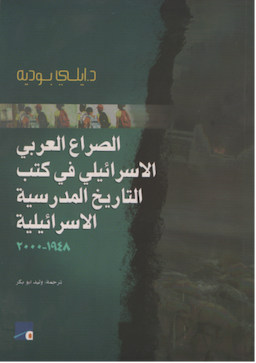
The Arab-Israeli Conflict in Israeli History Textbooks, 1948-2000. Westport, CT: Bergin and Garvey (Greenwood), 2002. 201 pages.
This study addresses a major cultural dimension of the conflict that has been neglected, namely, the presentation of the “other” – the Arab – in Israeli school textbooks. School textbooks play a vital role in shaping the attitudes and knowledge of young students, as they reflect the norms and values of any given society. These assumptions are particularly relevant to history school textbooks, which tend to convey the state’s “official knowledge.” Each party to the conflict creates its own historical narrative, which is often replete with inaccuracies, biases, prejudices, stereotypes and omissions. Such distorted historical narratives foster a “silent” conflict, which is no less poignant than the military or the diplomatic one and its impact is just as lasting. This book discusses the methodological problems inherent in the study of school textbooks. Largely based on theoretical and empirical studies carried out in Europe and the US, it sets out the premises and methods that guided the research. The second part of the study attempts to uncover the zeitgeist that existed in Israel at the time the textbooks were written and shaped their content. The third part includes the empirical study. In it we view the image of the “other” through the prism of major topics in the Arab-Israeli conflict, such as the 1948 war, the refugee problem, the 1936-39 Revolt, the 1956 and 1967 Wars, the Israeli-Egyptian treaty, the Arab minority in Israel, etc.
Article
مقالات محكمة

The Boycott that Never Was: Egypt and the Arab System, 1979-1989

2002

Durham Middle East Papers, Monograph No. 72. University of Durham, Institute for Middle Eastern and Islamic Studies, December 2002, 90 pages. [with Onn Winckler]
Other
مقالات أخرى

Al-Nazra ila al-Akhar fi al-Kutub al-Madrasiyya al-Isra'iliyya [Arabic]

2001

al-Liqa', Vol. 16, Nos. 1-2 (2001), pp. 107-172. [Arabic]
Regaining Lost Pride: The Impact of the Suez Affair on Egypt and the Arab World
فصول في المجموعات

Regaining Lost Pride: The Impact of the Suez Affair on Egypt and the Arab World

2001

"Regaining Lost Pride: The Impact of the Suez Affair on Egypt and the Arab World," in David Tal (ed.), The 1956 War. London: Frank Cass, 2001, pp. 209-224.
The Suez Affair (1956) profoundly impacted Egypt and the Arab world by sparking immense nationalist pride, cementing Gamal Abdel Nasser as a pan-Arab hero, shifting focus from Western alliances to non-alignment (Soviet-leaning), and exposing the declining power of Britain and France, signaling a new bipolar world order dominated by the US and USSR, with Nasser's defiance against imperial aggression fostering anti-colonial sentiment globally.
Religion and State in Islam [Hebrew]
مجلات محررة

Religion and State in Islam [Hebrew]

2001

Haim Gerber and Elie Podeh, Religion and State in Islam. Hamizrah Hehadash, Vol. 42 (2001), 296 pages.
Article
مقالات محكمة

The Dilemma and Challenge of Writing the History of the Contemporary Middle East: Review Article [Hebrew]

2001

Hamizrah Hehadash, Vol. 42 (2001), pp. 249-264. [Hebrew]
Article
مقالات محكمة

A Crystallization of the Arab State System: A Reconsideration [Hebrew]

2000

Hamizrah Hehadash, Vol. 41 (2000), pp. 86-106. [Hebrew]
History and Memory in the Israeli Educational System: The Portrayal of the Arab-Israeli Conflict in History Textbooks (1948-2000)
مقالات محكمة

History and Memory in the Israeli Educational System: The Portrayal of the Arab-Israeli Conflict in History Textbooks (1948-2000)

2000

"History and Memory in the Israeli Educational System," History and Memory, Vol. 12, No. 1 (2000), pp. 65-100.
State and Society in the Middle East [Hebrew]
مجلات محررة

State and Society in the Middle East [Hebrew]

2000

Haim Gerber and Elie Podeh, State and Society in the Middle East. Hamizrah Hehedash, Vol. 41 (2000), 215 pages.
Article
مقالات محكمة

Politics, Ideology and the Role of the Leader in the Jewish Yishuv and Young Israel

1999

“Politics, Ideology and the Role of the Leader in the Jewish Yishuv and Young Israel,” Middle East Studies Association Bulletin, Vol. 33, No. 2 (1999), pp. 16-21.
 
The Decline of Arab Unity: The Rise and Fall of the United Arab Republic
كتب

The Decline of Arab Unity: The Rise and Fall of the United Arab Republic

1999

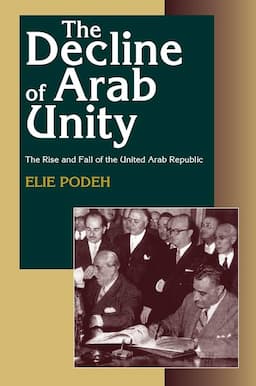
The Decline of Arab Unity: The Rise and Fall of the United Arab Republic. Brighton: Sussex Academic Press, 1999. 303 pages.
In spite of its short duration, the rise and demise of the United Arab Republic (UAR) – the union between Egypt and Syria – is considered a seminal episode in the modern history of the Arab world. At the time, many Arabs hoped that the union would herald the realization of the pan-Arab dream, but its disintegration shattered this dream beyond repair. With the wisdom of hindsight, it is also clear that this episode had a significant, lasting impact on the evolution of Arab politics and pan-Arabism. Yet, in spite of the recognized historical importance of the UAR, there has been no systemic study of this episode, analyzing the processes that led to the establishment and subsequent disintegration of the UAR, as well as its lessons and heritage for the Arab world. The book relies on archival material located in the United States, Canada, Britian and Israel, as well as all the available sources in Arabic. **Choice Outstanding Academic Book of the Year.**
The Desire to Belong Syndrome: Israel and Middle Eastern Defense, 1949-1954
مقالات محكمة

The Desire to Belong Syndrome: Israel and Middle Eastern Defense, 1949-1954

1999

"The Desire to Belong Syndrome," Israel Studies, Vol. 4, No. 2 (1999), pp. 121-149.
"The Desire to Belong Syndrome" describes Israel's post-1948 drive to integrate into Western defense structures (NATO, SEATO) due to deep insecurity from hostile Arab neighbors, seeking arms, security guarantees, and recognition, even though its motivations were regional, not purely anti-Soviet; this "syndrome", coined by scholar Elie Podeh, highlights Israel's earnest attempts to find acceptance within the Western bloc for survival.
The Emergence of the Arab State System Reconsidered
مقالات محكمة

The Emergence of the Arab State System Reconsidered

1998

"The Emergence of the Arab State System Reconsidered," Diplomacy and Statecraft, Vol. 9, No. 3 (1998), pp. 50-82.
The literature on the Arab state system is based on the assumption that the establishment of the Arab League in 1945 heralded the birth of the system. The main argument of this article, however, is that the main features of the Arab system had crystallized in the mid‐1930s and that the formation of the Arab League only instutionalized the existing patterns. Although the emerging system was deeply penetrated by Britain and France, the intense interactions among the core Arab states indicated that they enjoyed considerable leeway which allowed them to pursue their own interests and form an Arab system with its own patterns and features. In addition, it is argued that in spite of the artificiality of most of the Arab states, local nationalism (wataniyya) had become as strong as pan‐Arabism (qawmiyya), and statehood had become a major attribute of the Arab system.
Article
مقالات محكمة

Rethinking Israel in the Middle East

1997

"Rethinking Israel in the Middle East," Israel Affairs. Vol. 3, Nos. 3-4 (1997), pp. 336-354.
Article
مقالات محكمة

The Portrayal of the Arab-Israeli Conflict in Israeli History and Civics Textbooks, 1953-1995

1997

Gitelson Peace Publications, No. 9. Jerusalem: The Harry S. Truman Research Institute for the Advancement of Peace

Egypt's Struggle against the Militant Islamic Groups
مقالات محكمة

Egypt's Struggle against the Militant Islamic Groups

1996

"Egypt's Struggle against the Militant Islamic Groups," Terrorism and Political Violence, Vol. 8, No. 2 (1996), pp. 43-61.
The Arab-Israeli Peace Process
فصول في المجموعات

The Arab-Israeli Peace Process

1996

"The Arab-Israeli Peace Process," in Ami Ayalon and Bruce Maddy-Weitzman (eds.), Middle East Contemporary Survey, Vol. 18, 1994. Boulder: Westview, 1996, pp. 46-78.
The Drift towards Neutrality: Egyptian Foreign Policy in the Early Nasserist Era
مقالات محكمة

The Drift towards Neutrality: Egyptian Foreign Policy in the Early Nasserist Era

1996

"The Drift towards Neutrality," Middle Eastern Studies, Vol. 32, No. 1 (1996), pp. 159-178.
Egyptian foreign policy in the early Nasserist era (1952-1955) saw a strategic "drift towards neutrality," moving away from Western alignment to establish regional autonomy, driven by opposition to Western-backed military pacts like the Baghdad Pact that threatened Egypt's Arab leadership, leading Nasser to seek arms independently and champion Non-Alignment, ultimately challenging Western influence and solidifying Egypt's independent path in the Cold War Middle East.
The Quest for Hegemony in the Arab World: The Struggle over the Baghdad Pact (Tel Aviv Edition)
كتب

The Quest for Hegemony in the Arab World: The Struggle over the Baghdad Pact (Tel Aviv Edition)

1996

The Quest for Hegemony in the Arab World: The Struggle over the Baghdad Pact. Tel Aviv: Ministry of Defense, 1996. 341 pages.
The struggle between Egypt and Iraq over Arab hegemony constitutes the main theme of this study. Focusing on the struggle over Middle Eastern defense between 1945-1958, and culminating in the conflict over the Baghdad Pact (1955-1958), it sheds new light on Arab politics during the period under review. This book concentrates on the regional actors. The underlying assumption is that policies were not necessarily formulated in Washington and London, and that – often enough – major decisions were taken in Ankara, Cairo, Baghdad, Damascus, Amman and other Arab capitals affected decision-makers in Western capitals. The book is based on newly-declassified British, American and Israeli archival documents, as well as on all the available sources in Arabic. The historical analysis of the episode is preceded by a theoretical discussion of the term “hegemony” and its application to the Arab world in general and the Egyptian-Iraqi rivalry in particular.
Egypt
فصول في المجموعات

Egypt

1995

"Egypt," in Ami Ayalon (ed.), Middle East Contemporary Survey, Vol. 17, 1993. Boulder: Westview, 1995, pp. 282-316.
The Gulf crisis, a historical watershed for certain Middle Eastern countries, had a profound impact on Egypt in many ways, and the potential for even more important changes in times to come. Egypt's regional and international position was rather comfortable until the outbreak of the Gulf crisis in August. By the end of the year, Egypt was in a position where it had been nominated to play a central role in a major international drama that was about to start, and that would no doubt leave its mark on the country. Interrupting a trend of continual economic decline in Egypt,, the Gulf crisis had a major impact on the country's material fortunes. Egypt's sociopolitical scene in 1990 was characterized by an excessive degree of violence. The year 1990 was important in the development of Egypt's multiparty system, the state's safety valve for sociopolitical pressures.
Ending an Age-Old Rivalry: The Rapprochement between the Hashemites and the Saudis, 1956-1958
فصول في المجموعات

Ending an Age-Old Rivalry: The Rapprochement between the Hashemites and the Saudis, 1956-1958

1995

"Ending an Age-Old Rivalry: The Rapprochement between the Hashemites and the Saudis, 1956-1958," in Asher Susser and Arie Shmuelevich (eds.), The Hashemites in the Modern Arab World. London: Frank Cass, 1995, pp. 85-108.
Until the mid-1950s, the bitter conflict between the Hashemite and Saudi dynasties remained a permanent facet of inter-Arab relations. Every configuration of political coalitions in the Arab world necessarily pitted Saudi Arabia against Iraq and Jordan. The years 1956-58 saw the dissipation of this long-lasting feud. The tripartite coalition between Egypt, Syria and Saudi Arabia, which had been formed during 1955, was gradually replaced by a royalist-conservative axis which included the monarchies of Iraq, Jordan and Saudi Arabia.1 This was the first time that common interests shared by the Saudis and the Hashemites had induced their leaders to overcome past differences and form a new alignment against the emerging Egyptian challenge posed by 'Abd al-Nasir.
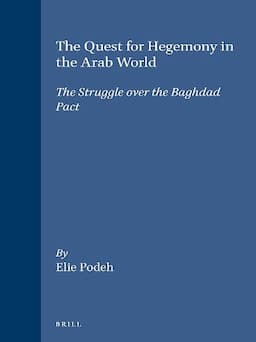
The Quest for Hegemony in the Arab World: The Struggle over the Baghdad Pact
كتب

The Quest for Hegemony in the Arab World: The Struggle over the Baghdad Pact

1995

The Quest for Hegemony in the Arab World: The Struggle over the Baghdad Pact. Leiden: E. J. Brill, 1995. 281 pages.
The struggle between Egypt and Iraq over Arab hegemony constitutes the main theme of this study. Focusing on the struggle over Middle Eastern defense between 1945-1958, and culminating in the conflict over the Baghdad Pact (1955-1958), it sheds new light on Arab politics during the period under review. This book concentrates on the regional actors. The underlying assumption is that policies were not necessarily formulated in Washington and London, and that – often enough – major decisions were taken in Ankara, Cairo, Baghdad, Damascus, Amman and other Arab capitals affected decision-makers in Western capitals. The book is based on newly-declassified British, American and Israeli archival documents, as well as on all the available sources in Arabic. The historical analysis of the episode is preceded by a theoretical discussion of the term “hegemony” and its application to the Arab world in general and the Egyptian-Iraqi rivalry in particular.
Article
مقالات محكمة

In the Service of Power: The Ideological Struggle in the Arab World - the Gulf Crisis (1990-1991)

1994

"In the Service of Power," Journal of Conflict Studies, Vol. 14, No. 4 (1994), pp. 5-25.
The Struggle over Arab Hegemony after the Suez Crisis
مقالات محكمة

The Struggle over Arab Hegemony after the Suez Crisis

1993

"The Struggle over Arab Hegemony after the Suez Crisis," Middle Eastern Studies, Vol. 29, No. 1 (1993), pp. 91-110.
After the Suez Crisis (1956), the struggle for Arab leadership intensified, cementing Gamal Abdel Nasser's Egypt as the center of Pan-Arab nationalism against traditional powers, while also highlighting divisions between Nasser's anti-Western, socialist vision and conservative monarchies (like Saudi Arabia), leading to US intervention (Eisenhower Doctrine) to counter Soviet influence, and ultimately shaping regional dynamics by eclipsing old European empires and shifting focus from London/Paris to Cairo, Washington, and Moscow.
Article
مقالات محكمة

The Cold War in the Middle East: The Western Quest for Regional Defense Organization, 1945-1953

1992

"The Cold War in the Middle East," Orient, Vol. 33, No. 2 (1992), pp. 265-277.
Article
مقالات محكمة

A Year after Iraq's Invasion of Kuwait: The Impact of the Crisis in the Gulf on the Arab System

1991

Data and Analysis. Tel Aviv: The Moshe Dayan Center for Middle East and African Studies